Economic volatility—the unpredictable swings in prices, markets, and economic conditions—has many causes: inflation, interest rate changes, supply chain issues, and market instability. In times like these, many business owners and real estate investors take a wait-and-see approach to avoid risky capital outlays or heavy debt.
The problem? When the dust settles, most of us (myself included) wish we’d acted on opportunities that were clearer in hindsight but hidden by what I call the “Fog of the Future.”
Think in Terms of Strategy
Different outlooks require different approaches: optimism vs. pessimism, short-term vs. long-term, cash flow vs. appreciation. The key is to ask: What actions can I take that win big if I’m right and lose little if I’m wrong?
And that starts with the quality of your information. Data is the raw ingredient for good decisions—bad data leads to bad results, no matter how skilled the decision-maker.
The Employment Example
When you hear “employment numbers,” your first impression might come from headlines like these:
- US labor market cracks widen as job growth hits stall speed – Reuters
- The labor market just hit a wall – CBS News
Now compare those to the actual July data:
- +73,000 nonfarm jobs
- 4.2% unemployment rate
- +$0.12 average hourly earnings
222,000 fewer unemployed (total: 7.015 million)
Not stellar—but not catastrophic either. And here’s a figure I watch even closer: 7.4 million job openings (June 2025), up 25,000 from a year ago. That means businesses are hiring—but can’t find enough qualified or available workers.
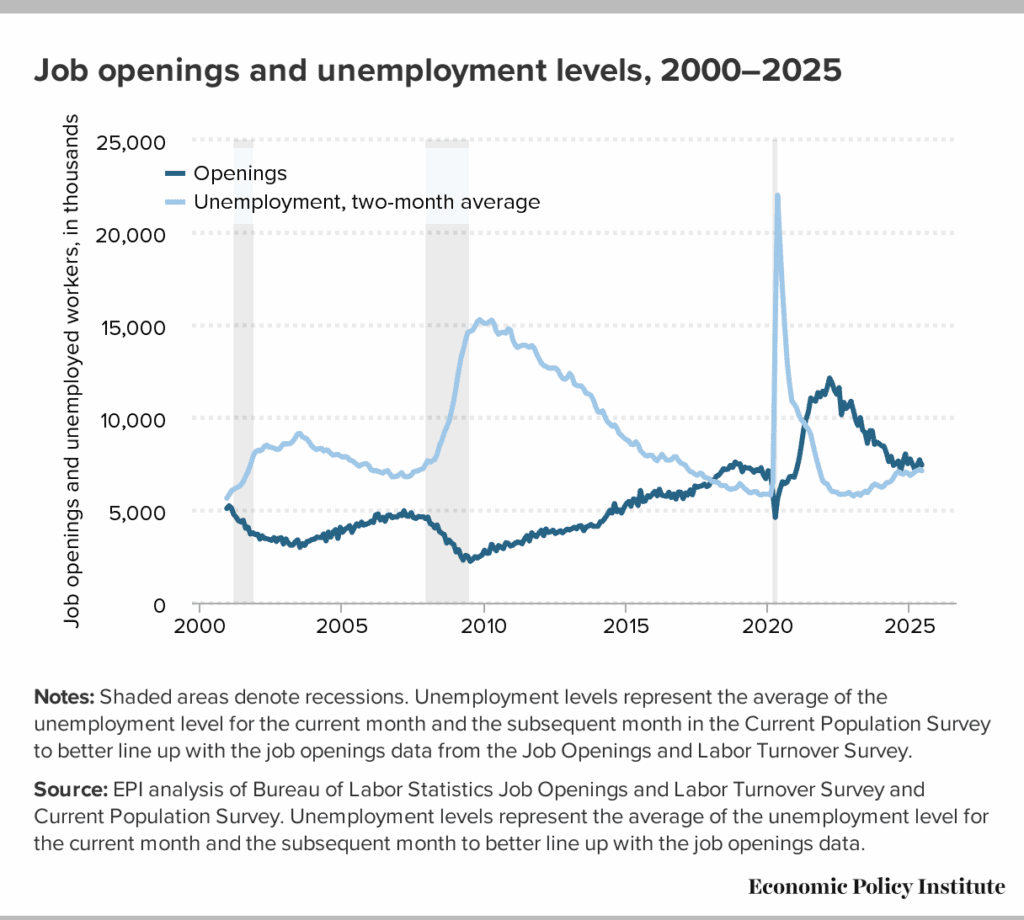
Why?
- Skills gap – Many job seekers aren’t qualified for open roles.
- Geographic mismatch – Jobs aren’t where the unemployed are. In New Hampshire, even if every unemployed person took a job, 30% of openings would remain. Low housing supply—4% rental vacancy, 2,500 homes for sale at a $649,000 median price—makes relocation tough.
Where Technology Fits
Automation and AI may eventually fill some lower-level roles, especially in regions like northern New England. But for high-skill jobs, we’re still years away from AI being a viable substitute.
The Bottom Line
Short-term outcomes are hard to predict—interest rates, geopolitics, and government policy will shape the winners and losers. But long-term, I’m optimistic. The confidence shown in 10-year Treasuries and capital investment projects supports that outlook.
Now is the time to build a strategy, gather reliable data, and work with a team that can help you act when opportunity appears. If you need a commercial broker, our Coastal Land & Commercial Group can help you both design and execute that strategy.